
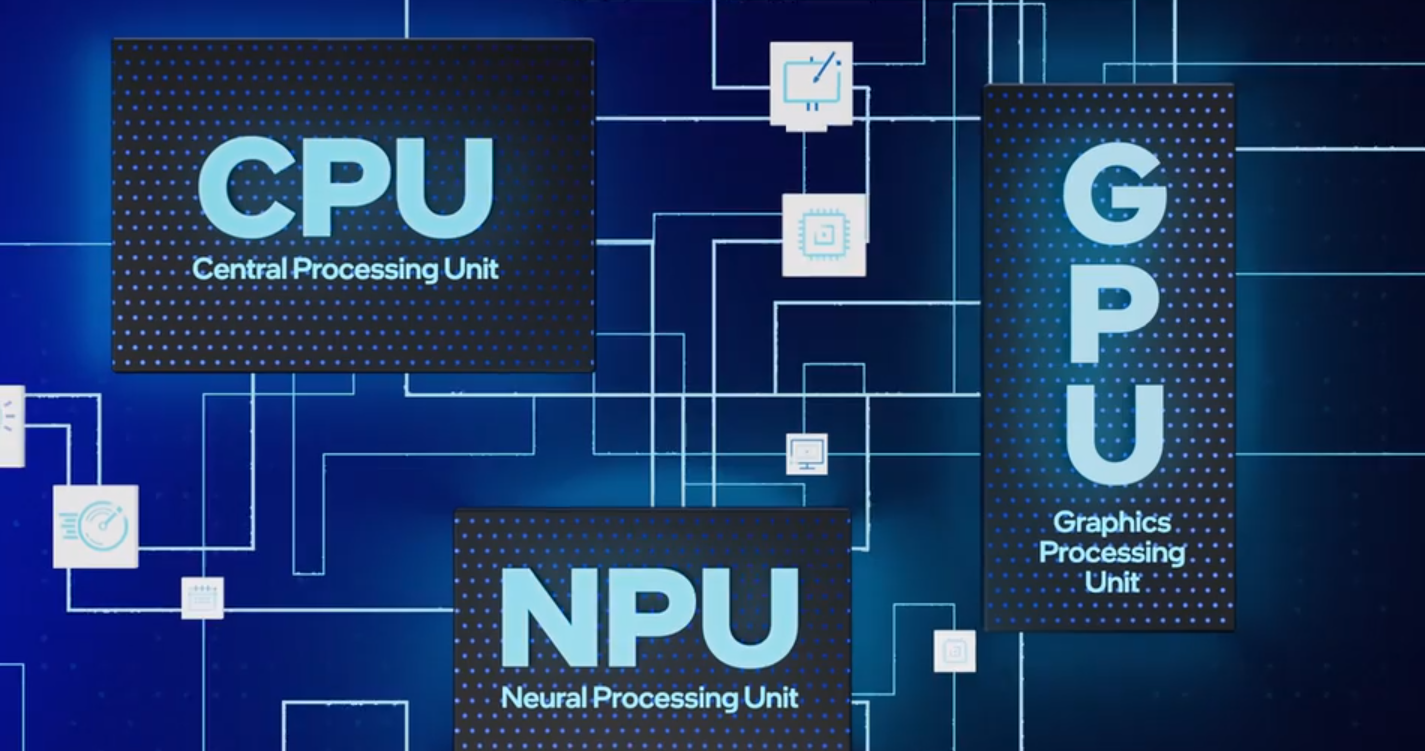
If you’re shopping for a laptop in 2026, you’re going to hear one acronym more than any other: NPU. It stands for Neural Processing Unit, and it’s rapidly becoming the most important chip inside your computer. Not the CPU. Not the GPU. A dedicated AI engine that’s quietly rewriting what a laptop can do.
For years, buying a laptop meant checking processor generation, RAM, and storage. Those specs still matter, but they’re no longer the whole story. The industry has shifted. CES 2026 made that unmistakably clear. Every major manufacturer — from Dell and HP to ASUS and Lenovo — unveiled new machines built around AI-first silicon. cite🛠web_search:11#5:~:text=CES 2026 arrived as a turning point...manufacturers and silicon partners moved beyond heady promises and unveiled concrete Copilot+ PC hardware
This isn’t a gimmick. It’s a platform change. And if you don’t understand what’s happening, you risk buying yesterday’s computer at tomorrow’s price.

What an AI PC Actually Is
At its core, an AI PC is a computer designed to run artificial intelligence tasks locally instead of shipping everything to the cloud. That requires specialized hardware. Microsoft has defined the standard under its Copilot+ PC program: any machine carrying that badge must have an NPU capable of at least 40 trillion operations per second, 16GB of RAM, a 256GB SSD, and Windows 11 version 24H2 or newer. cite🛠web_search:11#1:~:text=To be a Copilot+ PC, a consumer system must have these hardware requirements...NPUs capable of at least 40 TOPS
That 40 TOPS threshold is the gatekeeper. It unlocks a suite of on-device AI features — Windows Recall, Live Captions with real-time translation, Click to Do, and Windows Studio Effects — all running locally without touching the internet. cite🛠web_search:11#6:~:text=That bar is what unlocks the on-device feature set — Windows Recall, Live Captions with real-time translation, Click to Do, and Windows Studio Effects
The NPU handles these tasks at a fraction of the power a CPU or GPU would consume. That means your battery lasts longer, your fan stays quieter, and your data never leaves the machine. For anyone who works on sensitive documents or travels frequently, that local processing is a genuine advantage.
The Silicon Wars: Who’s Winning?
Three chipmakers are fighting for dominance in the AI laptop space, and each took a victory lap at CES 2026.
Intel unveiled its Core Ultra Series 3 processors, built on the company’s new 18A manufacturing process. These chips add up to 16 CPU cores, expanded Arc graphics, and NPUs rated up to 50 TOPS. Intel claims this is its most broadly adopted AI PC platform ever, with over 200 designs from global partners. Pre-orders are already live, with systems hitting shelves by late January. cite🛠web_search:11#3:~:text=Intel introduced its Intel Core Ultra Series 3 processors...the first compute platform built on Intel 18A
AMD answered with the Ryzen AI 400 series, promising up to 60 TOPS from its XDNA 2 NPUs. AMD’s pitch is a “full-stack” approach: CPU, GPU, and NPU on a single die, optimized for everything from thin-and-light notebooks to workstation-class machines. The higher-end Ryzen AI Max+ 395 even targets developers who want to run large language models locally, with up to 96GB of unified memory allocatable to the integrated GPU. cite🛠web_search:11#5:~:text=AMD answered with the Ryzen AI 400 family...promising up to 60 TOPS in higher SKUs
Qualcomm pushed the NPU envelope furthest with the Snapdragon X2 Plus, delivering up to 80 TOPS. The company is betting that Arm-based Windows PCs can finally deliver the performance and compatibility users expect while maintaining the battery efficiency that made Qualcomm famous in phones. cite🛠web_search:11#3:~:text=Qualcomm Technologies, Inc. launched the Snapdragon X2 Plus...purpose built to unlock richer AI experiences with 80 TOPS NPU
All three clear the Copilot+ bar. All three promise multi-day battery life. And all three are showing up in machines that look increasingly indistinguishable from traditional laptops — until you use them.
What You Can Actually Do With All This Power
Here’s where marketing hype meets reality. The 40 TOPS NPU doesn’t turn your laptop into a local ChatGPT server. It’s not designed for running massive 70-billion-parameter models. What it does exceptionally well is smaller, always-on tasks that improve your daily workflow.
Recall lets you search your digital history by description. Can’t remember which email contained that attachment? Describe it, and Recall finds it. Live Captions translates audio from over 40 languages into English subtitles in real time, even offline. Windows Studio Effects cleans up your video calls with gaze correction, background blur, and voice isolation — all processed on-device so your webcam feed never gets sent to a server. cite🛠web_search:11#0:~:text=Recall: Search your digital memory by describing how you remember something...Live Captions with Translations...Windows Studio Effects
These features sound minor individually, but together they change how you interact with your machine. Your laptop starts feeling less like a tool you command and more like an assistant that anticipates. That’s the real shift.
But TOPS Isn’t Everything
If you’re thinking about buying an AI PC to run local large language models, you need to understand a critical distinction. TOPS — those trillions of operations per second — measures raw compute. But running a big AI model is limited by memory bandwidth, not just compute. cite🛠web_search:11#6:~:text=TOPS is the wrong yardstick for LLM speed...the comparison that actually predicts tokens per second is memory bandwidth and usable VRAM
An NPU with 80 TOPS sounds impressive, and it is — for the Windows AI features it was designed for. But if you want to run a 30-billion-parameter model locally for coding or research, you’re better off with a discrete GPU or a machine with massive unified memory like the Ryzen AI Max+ 395. Most mainstream AI runtimes like Ollama and LM Studio actually route to the GPU or CPU, not the NPU, because the NPU requires specially converted models. cite🛠web_search:11#6:~:text=Mainstream runtimes don't even use the NPU...The NPU needs hand-converted ONNX models via QNN or OpenVINO
So match the machine to the job. A Copilot+ PC is perfect for battery life, privacy, and built-in Windows AI features. It is not a replacement for a desktop with a high-end graphics card if your goal is heavy local AI development.
Laptops Are Changing Shape, Too
The AI push isn’t just about chips. It’s reshaping what a laptop even looks like. ASUS showed off the Zenbook DUO, a dual-screen OLED machine that switches between laptop, desktop, and content-sharing modes. HP revealed the EliteBoard G1a — essentially a full PC built into a keyboard. Dell slimmed down its XPS line to the thinnest chassis ever while promising industry-leading battery life. cite🛠web_search:11#5:~:text=HP marketed the EliteBoard as the world's first full AI PC built into a keyboard...ASUS Zenbook DUO doubles down on integrated dual OLED touchscreens
These experiments matter because AI workloads change how we use screen real estate. Real-time translation, AI-generated content, and intelligent document analysis all benefit from more display space or more flexible form factors. The laptop of 2026 isn’t just faster — it’s reimagined around what AI makes possible.
AI PC vs. Traditional Laptop: What’s the Real Difference?
| Factor | Traditional Laptop | AI PC / Copilot+ PC |
|---|---|---|
| AI Processing | CPU/GPU only, higher power draw | Dedicated NPU, efficient and quiet |
| Battery Life | Typical 6-10 hours | Multi-day battery on many models |
| Privacy | Cloud-dependent for AI features | On-device processing, data stays local |
| Key Features | Standard Windows experience | Recall, Live Captions, Studio Effects |
| Local LLMs | Possible but slow and draining | Limited to small models; big LLMs need GPU |
| Price | Wide range, often lower entry | Moderate premium, dropping fast |
The Pros and Cons of Buying an AI PC Now
Pros:
- Dramatically better battery life for AI-assisted tasks
- Privacy-first processing for sensitive work
- Genuinely useful built-in features like Recall and Live Captions
- Future-proofed as Windows AI features expand
- Silent operation during AI workloads thanks to low-power NPU
Cons:
- Slight price premium over traditional laptops with similar specs
- Can’t run large local LLMs well without discrete GPU or maxed memory
- Some AI features still feel like demos rather than essentials
- Arm-based models may have occasional app compatibility issues
- The NPU ecosystem is evolving; not all apps use it yet
Expert Tip: Don’t Buy for the Spec Sheet Alone
Here’s the mistake most buyers make: they see “80 TOPS” and assume more is automatically better. For the vast majority of users, it isn’t. The difference between a 40 TOPS NPU and an 80 TOPS NPU is virtually invisible if all you’re doing is running Windows Studio Effects, translating captions, and occasionally using Recall.
Instead, prioritize the basics that affect your daily experience. Screen quality matters more than NPU throughput for most people. Keyboard feel, port selection, and build quality don’t show up in AI benchmarks but determine whether you enjoy using the machine. And if you care about local LLMs, ignore the TOPS number entirely and look at memory bandwidth and total RAM. cite🛠web_search:11#6:~:text=Buy by job: AI PC for features, GPU box for big LLMs
If you’re choosing between a Copilot+ PC with a gorgeous display and a slightly faster NPU in a mediocre chassis, pick the better screen every time. The AI features will improve with software updates. A bad display is forever.
Frequently Asked Questions
Do I need an AI PC for everyday work?
Not necessarily. If your workflow is mostly web browsing, document editing, and video calls, a traditional laptop still handles those tasks fine. But an AI PC makes those same tasks more efficient — better battery life, smarter video calls, and intelligent search — without costing much more. It’s becoming the default, not the exception.
Will an AI PC run ChatGPT or Claude locally?
No, not the full versions. The NPU in a Copilot+ PC is designed for smaller, optimized models and Windows-specific features. Running large conversational AI models locally requires a powerful discrete GPU or a workstation-class machine with massive unified memory. For ChatGPT and Claude, you’ll still use the cloud.
Are Arm-based Windows laptops reliable now?
Much more than before. Qualcomm’s Snapdragon X series and the new X2 Plus have closed the compatibility gap significantly. Most mainstream apps run natively or through emulation without issues. But if you rely on niche creative software, legacy enterprise tools, or specific developer environments, double-check compatibility before buying an Arm machine.
Is the 40 TOPS requirement just marketing?
It’s a real hardware floor, but it’s also a branding tool. Microsoft set the bar to ensure a consistent experience across Copilot+ PCs. A machine with 40 TOPS runs the same Windows AI features as one with 80 TOPS. The extra headroom mainly helps with multitasking AI workloads and future-proofing, not fundamentally different capabilities today.
Should I wait for next year’s models?
If you need a laptop now, buy now. The current generation is solid, and software support is only improving. If you’re specifically waiting for local LLM performance in a thin-and-light form factor, the Ryzen AI Max+ 395 and upcoming Intel Lunar Lake successors are pushing that boundary. But for general productivity, 2026’s crop is already excellent.
Final Thoughts
The laptop industry has reached an inflection point. For two decades, progress meant faster CPUs and sharper screens. Now it means smarter machines that understand context, preserve privacy, and adapt to how you work. The NPU is the engine behind that shift, and by the end of 2026, it will be hard to buy a new Windows laptop without one.
That doesn’t mean you need to obsess over TOPS ratings or chase the highest number. It means you should understand what you’re buying. An AI PC is a better everyday laptop — longer battery, quieter operation, useful built-in intelligence — not a magic box that replaces the cloud. Buy it for the practical benefits, not the hype.
Your next laptop will depend more on AI than you think. The good news is that’s mostly a positive change — as long as you know what you’re actually getting.
🎥 Recommended Video
Watch: AI PC Laptop Buying Guide 2026 — What You Actually Need to Know

No comments:
Post a Comment