
I spent $3,500 on the Apple Vision Pro when it launched. I told myself it was an investment in the future of computing. Six months later, I was using it as an expensive way to watch movies in bed. The productivity dreams faded. The spatial computing revolution felt more like a really nice screensaver.
Then Meta announced the Quest 4, and I did something I never thought I'd do. I pre-ordered a $500 VR headset from the company that used to sell me targeted ads for shoes I already bought. Two weeks of living with both devices side by side, and one of them went back in the box. Permanently.
The result surprised me. It wasn't about specs. It wasn't about price. It was about which device actually fit into my life without demanding that I rearrange my entire living room around it.

The Vision Pro Experience: Beautiful, But Demanding
The Apple Vision Pro is undeniably impressive. The micro-OLED displays are the best I've ever seen in any headset. Text is crisp. Colors are vivid. The passthrough quality makes you forget you're wearing a device, at least until you try to walk around and the field of view clips your peripheral vision into darkness.
But the weight is real. At 650 grams, it presses on your cheeks and forehead in ways that become uncomfortable after about 45 minutes. Apple includes two head straps, the Solo Knit Band that looks sleek but concentrates all the weight on your face, and the Dual Loop Band that distributes it better but makes you look like you're preparing for a spacewalk. Neither solves the fundamental problem: this thing is heavy.
The eye-tracking and hand-tracking interface feels like magic when it works. Look at a button, pinch your fingers, and it selects. No controllers needed. But it's also finicky. Bright lighting confuses the sensors. Resting your hands on a table breaks the tracking. And the lack of physical controllers means gaming is essentially impossible beyond simple gesture-based experiences.
The battery situation is awkward. An external battery pack connects via a cable and lasts about two hours. For desk work, you can plug it into the wall, but then you're tethered. For anything mobile, you're carrying a pocket-sized power brick that gets warm and needs its own charging routine.
The Quest 4 Experience: Less Polished, More Practical
The Meta Quest 4 doesn't have the Vision Pro's display quality. The 4K Micro-OLED panels are good, significantly better than the Quest 3's LCD setup, but they don't match the pixel density and color accuracy of Apple's custom micro-OLEDs. Text is readable but not razor-sharp. Dark scenes show some light bleed that the Vision Pro eliminates entirely.
But the Quest 4 is lighter. Noticeably lighter. Meta's redesigned goggle-like form factor and better weight distribution mean I can wear it for two-hour sessions without the face fatigue that made the Vision Pro a 45-minute device. The built-in battery lasts about the same two hours, but it's integrated into the headset itself, not dangling from a cable in your pocket.
The controllers are the biggest difference. The Quest 4 includes ergonomic hand controllers with haptic feedback, precise tracking, and actual buttons. For gaming, this is non-negotiable. For productivity, it's surprisingly useful. Scrolling through documents, selecting menu items, and navigating complex interfaces feels faster and more reliable than the Vision Pro's gaze-and-pinch system.
Eye and face tracking are now standard on the Quest 4, which closes one of the biggest gaps between the two devices. Foveated rendering improves performance by focusing GPU power where you're actually looking. Social avatars finally have natural expressions instead of blank, dead-eyed stares. It's not quite as precise as Apple's implementation, but it's close enough that the difference doesn't matter for most use cases.
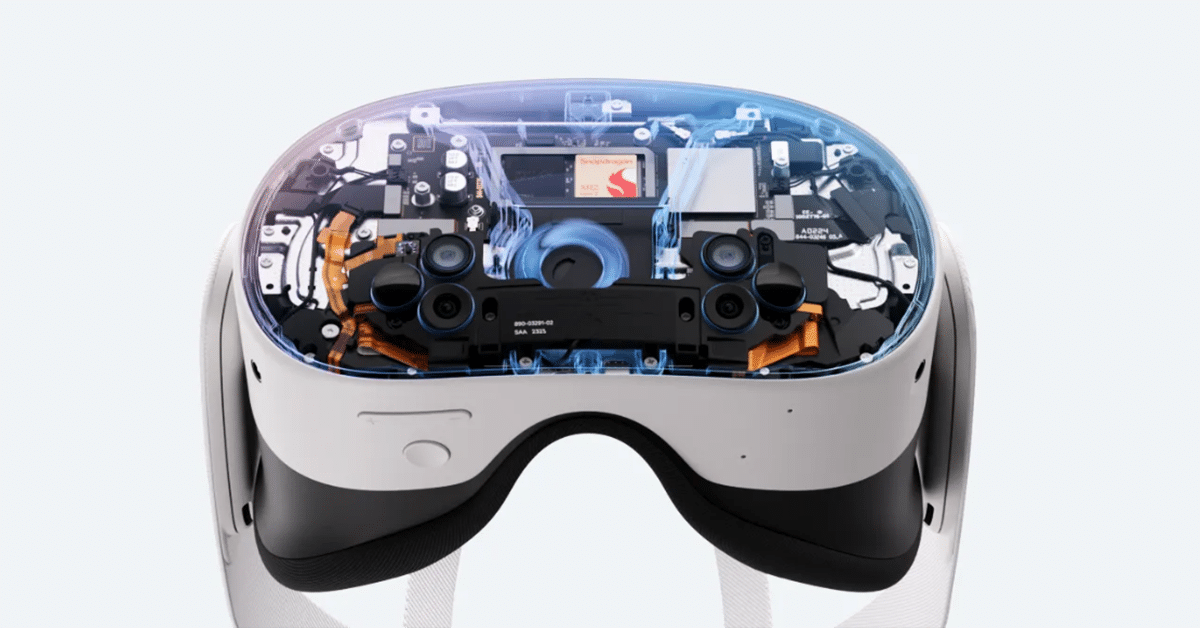
Where Each Device Actually Wins
| Category | Apple Vision Pro | Meta Quest 4 |
|---|---|---|
| Display quality | 🏆 Best in class micro-OLED | Very good 4K Micro-OLED |
| Comfort for long sessions | Heavy, 45-min limit | 🏆 Lighter, 2+ hours |
| Gaming | No controllers, limited | 🏆 Full controller support |
| Productivity | 🏆 Mac Virtual Display, spatial apps | Windows 11 passthrough, decent |
| Price | $3,499 | 🏆 ~$500-700 |
| App ecosystem | Limited, curated | 🏆 Thousands of games and apps |
| Social VR | FaceTime, Personas | 🏆 Meta Horizon, full avatars |
The Moment I Knew Which One Was Staying
It happened on a Tuesday evening. I wanted to watch a movie and relax. With the Vision Pro, this meant finding the battery pack, making sure it was charged, connecting the cable, adjusting the head strap, and then sitting perfectly still because any head movement made the weight more noticeable. It felt like preparing for a medical procedure.
With the Quest 4, I grabbed the headset from my coffee table, slipped it on, and was in my virtual theater in under ten seconds. The controllers were already paired. The battery was full because I'd charged it overnight like my phone. The movie started. I reclined. I forgot I was wearing anything.
That was the difference. The Vision Pro is a remarkable piece of engineering that demands your attention and accommodation. The Quest 4 is a tool that gets out of your way and lets you do what you wanted to do in the first place.
Pros & Cons of Each Headset
✅ Apple Vision Pro Pros
- Best-in-class display quality with stunning micro-OLED panels
- Seamless integration with Mac ecosystem and spatial computing
- Premium build quality and materials
- Advanced eye and hand tracking interface
❌ Apple Vision Pro Cons
- Extremely heavy and uncomfortable for long sessions
- $3,500 price is prohibitive for most consumers
- External battery pack is awkward and limiting
- No controllers, severely limiting gaming potential
- Limited app ecosystem compared to competitors
✅ Meta Quest 4 Pros
- Significantly lighter and more comfortable for extended use
- Fraction of the price at around $500-700
- Full controller support for gaming and precise input
- Massive library of games, apps, and social experiences
- Integrated battery, no external pack needed
❌ Meta Quest 4 Cons
- Display quality, while good, doesn't match Vision Pro
- Passthrough and mixed reality less refined than Apple
- Meta's ecosystem comes with privacy concerns
- Less polished productivity integration with non-Windows systems
Expert Tip
If you're deciding between these two, ask yourself one question: what do you actually want to do in VR? If the answer is primarily productivity, Mac integration, and high-end media consumption, the Vision Pro is the better technical tool. If the answer is gaming, social experiences, casual media, or anything that requires more than an hour of continuous wear, the Quest 4 is the smarter choice.
Also, consider the hidden cost of the Vision Pro. The $3,500 base price doesn't include the travel case ($200), additional battery pack ($200), or prescription lens inserts ($150+). The Quest 4's all-in cost is closer to $600 with accessories. That's a $3,000 difference that buys a lot of tolerance for slightly less impressive displays.
FAQ
Is the Meta Quest 4 actually better than the Vision Pro?
It depends on your priorities. The Vision Pro has superior display quality and Mac integration. The Quest 4 wins on comfort, price, gaming, and overall practicality. For most consumers, the Quest 4 delivers a better value proposition.
Can the Quest 4 do productivity work like the Vision Pro?
Yes, but differently. The Quest 4 supports Windows 11 passthrough and virtual monitors, but it's not as seamlessly integrated with macOS as the Vision Pro. For Windows users, the gap is smaller. For Mac users, the Vision Pro is still the better productivity choice.
Is the Vision Pro worth $3,500?
For developers, early adopters, and professionals deeply embedded in the Apple ecosystem, maybe. For the average consumer looking for VR entertainment, absolutely not. The Quest 4 provides 80% of the experience at 15% of the price.
Does the Quest 4 require a Facebook account?
Meta has separated VR accounts from Facebook accounts, so you can use a standalone Meta account. However, some social features still encourage Facebook integration. Privacy-conscious users should review Meta's data policies before purchasing.
Which headset is better for fitness and exercise?
The Quest 4, by a wide margin. It's lighter, has better controller tracking for active games, and supports a massive library of fitness apps. The Vision Pro's weight and lack of controllers make it unsuitable for anything beyond seated meditation apps.
🎥 Recommended Video
Watch: Apple Vision Pro vs Meta Quest 4 Comparison 2026Final Thoughts
I didn't expect to return a $3,500 device and keep a $500 one. The Vision Pro is objectively more advanced in several ways. But advancement doesn't always equal usefulness. Apple's headset is a stunning technical achievement that feels like a prototype for the future. Meta's headset is a practical tool for right now.
The Vision Pro went back in its box because it asked too much of me. Too much money. Too much weight. Too much compromise. The Quest 4 stayed because it asked almost nothing. It just worked, for gaming, for movies, for social hangouts, for the casual VR experiences that actually make up 90% of my usage.
If you're on the fence, my advice is simple. Don't buy the future. Buy what you'll actually use today. For most people in 2026, that's the Quest 4. The Vision Pro is incredible. But incredible isn't always enough.

No comments:
Post a Comment