
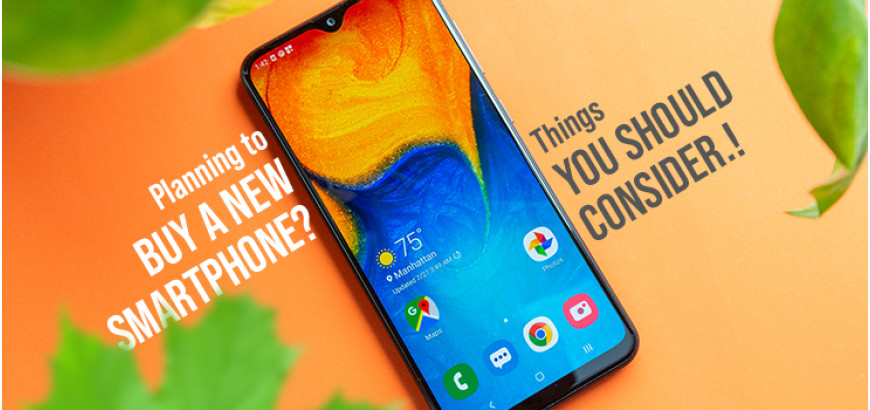
Walking into a phone store in 2026 feels less like shopping and more like walking into a casino. Everywhere you look, there's another screen promising to change your life. Bigger displays. AI cameras. Titanium frames. And somehow, every single model is the "best one yet."
Here's the truth most salespeople won't tell you: the difference between a $400 phone and a $1,200 phone has never been smaller. But the gap between what you actually need and what you're being sold? That's wider than ever.
Start With the Number Nobody Wants to Talk About
Your budget isn't boring. It's your superpower.
Before you even glance at a spec sheet, lock in what you're willing to spend. Not what you can spend — what you're willing to spend. Phone makers are incredibly good at making that $300 jump feel trivial. "It's just another $15 a month," they'll say. But over three years, that "small" upgrade costs you $540.
In 2026, the budget phone category is genuinely impressive. Devices in the $250–$400 range now offer OLED displays, solid cameras, and day-long battery life. The mid-range ($400–$700) is where most people should shop. And flagships? They're luxury items disguised as necessities.
The Spec Sheet Trap
108 megapixels sounds incredible. So does 16GB of RAM. But here's what phone makers don't advertise: your eyes can't tell the difference between a 50MP and 200MP photo on a 6-inch screen. And 12GB of RAM runs Android just as smoothly as 16GB for 99% of users.
Specs are marketing tools, not buying guides. A phone with a "slower" processor but better software optimization will feel faster in daily use than a spec monster running bloated firmware. Don't let numbers hypnotize you.
Why Software Support Beats Raw Power
That shiny new chip? It'll feel ordinary in two years. But software updates? Those keep your phone secure, fast, and compatible with new apps for half a decade.
Apple still leads here, offering 5–6 years of iOS updates. Google and Samsung have caught up, promising seven years for their latest Pixel and Galaxy devices. Budget brands? You're lucky to get two. When you buy a phone, you're not just buying hardware. You're buying a promise about how long it'll stay relevant.
The Camera Reality Check
Every phone ad shows someone shooting professional-grade portraits at golden hour. What they don't show is the camera struggling in a dimly lit restaurant or oversaturating your dog's fur into an orange blob.
For most people, any phone over $400 takes photos that are more than good enough. The real differences show up in low light, zoom quality, and video stabilization. If you mostly shoot Instagram stories and casual snapshots, don't pay flagship prices for camera features you'll never use.
Battery Life: The Spec That Actually Affects Your Day
Nothing else matters if your phone dies at 4 PM. Battery capacity is one area where bigger genuinely is better. Look for 4,500mAh or higher. But also pay attention to charging speed — 25W is acceptable, 45W is great, and anything over 65W is genuinely fast.
Wireless charging is nice but slow. Reverse wireless charging is a party trick you'll use twice. Prioritize all-day endurance over charging gimmicks.
Storage: How Much Do You Really Need?
128GB is the new minimum. If you shoot a lot of video, spring for 256GB. But here's a secret: cloud storage is cheaper than phone storage. Google Photos, iCloud, and OneDrive can offload your memories for a few bucks a month. Don't pay $200 extra for 512GB unless you download movies for offline flights.
The "Future-Proofing" Myth
5G is everywhere now, so that's a non-issue. But salespeople will try to sell you on satellite connectivity, foldable displays, and AI features you can't even name yet. Most of it is noise.
Buy for what you do today, not what you might do in 2028. The phone that handles your current apps smoothly, takes decent photos, and lasts all day is the right phone. Everything else is speculation.
What You Actually Get at Each Price Point
| Feature | Budget ($200–$400) | Mid-Range ($400–$700) | Flagship ($700+) |
|---|---|---|---|
| Display | 90Hz LCD or OLED | 120Hz OLED | LTPO OLED, peak brightness |
| Camera | Good daylight shots | Great all-around | Pro-level, excellent zoom |
| Performance | Solid for daily use | Smooth gaming | Overkill for most users |
| Software Updates | 1–2 years | 3–4 years | 5–7 years |
| Build Quality | Plastic frame | Metal and glass | Premium materials |
Pros & Cons of Upgrading Right Now
| Pros | Cons |
|---|---|
| Newer phones get longer software support | Your current phone might still work fine |
| Better battery health on a fresh device | Flagship prices keep climbing |
| Improved cameras and AI features | Environmental cost of e-waste |
| Trade-in deals can offset the cost | Setup and data migration takes time |
Expert Tip
Before you buy, go to a store and hold the phone. Not for thirty seconds — for five minutes. Type a message. Scroll through a website. Check if the power button is where your thumb naturally rests. Specs live on paper, but ergonomics live in your hand. A phone that feels right will make you happier than a phone that benchmarks higher.
FAQ
Is it worth buying a flagship phone in 2026?
For most people, no. Mid-range phones now offer 90% of the flagship experience at half the price. Only buy flagship if you need pro-level cameras or want the longest software support.
How long should a new phone last?
With proper care, 3–4 years is realistic. Look for brands offering 4+ years of OS updates if you want to stretch it to 5 years.
Should I wait for the next model?
There's always a "next model" coming. If your current phone is dying, buy now. If it's working fine, waiting rarely hurts — but don't get stuck in an endless loop of anticipation.
Are refurbished phones a good deal?
Yes, if you buy from reputable sellers with warranties. Apple and Samsung both sell certified refurbished devices that look and function like new, often at 20–30% off.
Do I need a case and screen protector?
Absolutely. Even "durable" phones crack. A $30 case and $15 screen protector can save you a $300 repair. Think of it as cheap insurance.
Final Thoughts
Buying a phone doesn't have to be overwhelming. Strip away the marketing, ignore the spec-sheet arms race, and focus on what actually impacts your daily life. A good display, reliable battery life, decent cameras, and software that won't abandon you in two years.
The best phone isn't the most expensive one. It's the one that disappears into your day and just works. Find that, and you've already won.
━━━━━━━━━━━━━━━━━━
🎥 Recommended Video
https://www.youtube.com/results?search_query=smartphone+buying+guide+2026

No comments:
Post a Comment