
We've all been there. You open ChatGPT, type out a question, and get a surprisingly solid answer. It feels like magic—until it doesn't. Ask it to book your flights, file your expense report, or grab something from another room, and you hit a wall. That wall has a name: the chatbot ceiling. In 2026, the entire industry is scrambling to break through it.
What's coming next isn't just a better chatbot. It's a fundamental rewiring of how artificial intelligence interacts with the world around us. From autonomous agents that actually do things to robots that learn by watching videos, the next wave of AI is less about conversation and more about action. Here's what that looks like.
The Chatbot Ceiling Is Real
Let's be honest: large language models changed everything. They turned AI from a research curiosity into a daily utility for millions. But the format itself—type a prompt, get a text response—hasn't evolved much since the early days. It's still fundamentally a Q&A loop.
That loop works great for drafting emails or brainstorming ideas. But it breaks down fast when you need the AI to interact with external systems, maintain long-term memory, or handle multi-step tasks without hand-holding. The model knows a lot. It just can't do much.
That limitation is driving the biggest shift in AI since the transformer architecture. Investors have poured over $20 billion into agentic AI startups this year alone. The chatbot was the proof of concept. Now comes the product.
AI Agents: From Talking to Doing
The hottest term in Silicon Valley right now isn't "LLM." It's "agent."
AI agents are systems designed to take goals, break them into steps, and execute those steps across multiple tools and platforms. Instead of asking an AI to write a marketing plan, you tell an agent to research competitors, draft the strategy, create the presentation, and schedule the meeting. Then you watch it work.
Companies like Anthropic, OpenAI, and Google are all racing to build agentic frameworks. Claude can already use computers like a human—clicking buttons, filling forms, navigating software. OpenAI's Operator can browse the web and complete purchases. These aren't demos. They're shipping products.
The difference is subtle but massive. A chatbot answers questions. An agent completes missions. And that distinction is about to reshape how we work.
Multimodal AI: More Than Just Text
Another major leap is happening in how AI processes information. The next generation of models doesn't just read text—they see images, watch videos, listen to audio, and understand spatial relationships.
Google's Gemini and OpenAI's GPT-4o are already pushing this boundary. Show them a photo of a broken dishwasher, and they'll diagnose the problem. Point your phone at a foreign menu, and they'll translate it in real time. It's not perfect, but it's getting shockingly good, shockingly fast.
The real world isn't made of text. It's visual, auditory, and physical. Multimodal AI is how machines understand context the way humans do—not by reading, but by experiencing.
Embodied AI: When Software Grows a Body
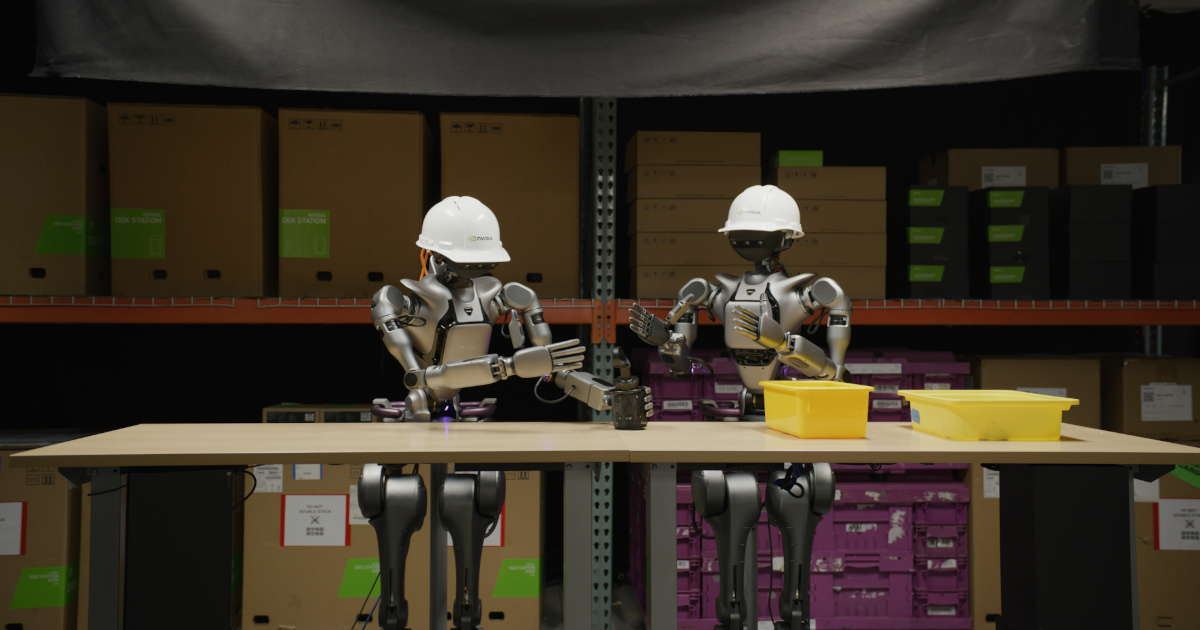
Perhaps the most visible shift is happening in robotics. For years, robots were programmed with rigid instructions: move here, pick up that, repeat. The new generation learns.
Figure AI, Tesla's Optimus, and Boston Dynamics' latest systems are using foundation models to control physical bodies. These robots watch human demonstrations, learn from video, and generalize to new tasks they were never explicitly programmed for. A robot that learns to fold towels from a YouTube tutorial sounds like sci-fi. In 2026, it's a pitch deck.
At CES 2026, humanoid robots were everywhere. Not as gimmicks, but as working prototypes. Warehouse bots that sort damaged packages. Home assistants that load dishwashers or prep meals. The line between software intelligence and physical capability is blurring faster than most expected.
The Enterprise Shift
Businesses are paying attention. Enterprises aren't just asking "How can we use AI?" anymore. They're asking "How can AI run parts of our business autonomously?"
Customer service was the obvious starting point. But the real money is in back-office automation—supply chain, legal review, forecasting, and IT management. Companies like Salesforce, ServiceNow, and Microsoft are embedding agentic AI directly into their platforms, turning enterprise software from a tool you use into a teammate that works alongside you.
This shift is happening quietly but quickly. By the end of 2026, Gartner predicts that 30% of enterprise software will include some form of autonomous agent capability. That number was near zero two years ago.
Chatbots vs. Next-Gen AI: What's Actually Different?
| Feature | Traditional Chatbots | Next-Gen AI Systems |
|---|---|---|
| Primary Function | Answer questions and generate text | Complete multi-step tasks autonomously |
| Input Types | Text-only prompts | Text, images, audio, video, and files |
| Memory | Session-based, limited context | Persistent long-term memory across sessions |
| External Integration | None or basic plugins | Deep API and software integration |
| Autonomy Level | Requires constant user prompting | Can operate independently with defined goals |
| Physical Presence | Purely software-based | Software plus robotics and embodied systems |
The Pros and Cons of Moving Beyond Chatbots
This transition brings huge opportunities, but it's not without trade-offs. Here's the honest breakdown.
Pros
- Massive productivity gains: Agents can handle complex workflows that used to take hours of human effort.
- True multimodal understanding: AI finally processes the world the way humans do—through sight, sound, and text together.
- 24/7 operation: Autonomous systems don't sleep, call in sick, or lose focus during repetitive tasks.
- Physical task automation: Embodied AI opens the door to automating jobs that were previously impossible to digitize.
Cons
- Security risks multiply: An AI with access to your email, calendar, and bank account is a hacker's dream target.
- Error correction is harder: When an agent makes a mistake across ten connected steps, diagnosing the failure is complex.
- Job displacement concerns: Administrative and repetitive physical roles face real disruption.
- Steep learning curve: Managing and orchestrating AI agents requires new skills that most workers don't have yet.
Expert Tip: Don't Sleep on the Transition
If you're building a career in tech, now is the time to understand agentic workflows. Learn how to design prompts for multi-step tasks. Get comfortable with AI tools that can interact with APIs and external data. The people who figure out how to orchestrate AI agents—how to chain them together, supervise them, and correct their mistakes—will be the most valuable professionals in the next five years.
It's not about replacing developers or writers. It's about becoming the conductor of an AI orchestra. The humans who thrive will delegate intelligently to machines while keeping final judgment in human hands.
Frequently Asked Questions
Are chatbots going away?
Not at all. Chatbots will stick around as an interface layer—sometimes you just want a quick answer. But they'll become one option among many, not the default mode of AI interaction.
What's the difference between an AI agent and a chatbot?
A chatbot responds to prompts with information. An agent takes a goal, plans steps, uses tools, and completes tasks with minimal human intervention. Think of it as the difference between a librarian and a personal assistant.
Is embodied AI safe for home use?
We're still in early days. Current home robots are limited in capability and closely supervised. Widespread unsupervised home use is likely still a few years away, pending safety certifications and real-world testing.
Will AI agents replace human workers?
They'll change job descriptions more than eliminate jobs outright. Roles focused on repetitive tasks will shrink, while demand for AI supervisors, prompt engineers, and systems integrators will grow.
When will these technologies be widely available?
Agentic AI tools are already rolling out in 2026. Enterprise adoption is accelerating now. Consumer-grade embodied AI and advanced home robots are probably two to four years from mainstream availability.
Final Thoughts
The chatbot era isn't ending. It's graduating. The text-based interfaces we've grown used to were always a starting point—a way to prove that AI could understand us. Now the industry is building the next layer: systems that don't just understand, but act.
That transition won't be seamless. There will be failures, security scares, and overhyped products. But the direction is clear. AI is moving from your browser tab into your workflows, devices, and physical space.
The question isn't whether this will happen. It's whether you'll be ready when it does.
🎥 Recommended Video
Watch the latest on AI Agents and Multimodal AI →

No comments:
Post a Comment