
I spent the last seven days letting AI completely take over my browser. Not in a dramatic sci-fi way — more like installing a handful of the most talked-about AI browser tools and extensions, then forcing myself to use them for real work. No cherry-picking demos. No staged screenshots. Just my actual workflow: research, writing, email, shopping, and way too many open tabs.
Here’s what surprised me, what disappointed me, and what I’m actually keeping installed after the week is over.
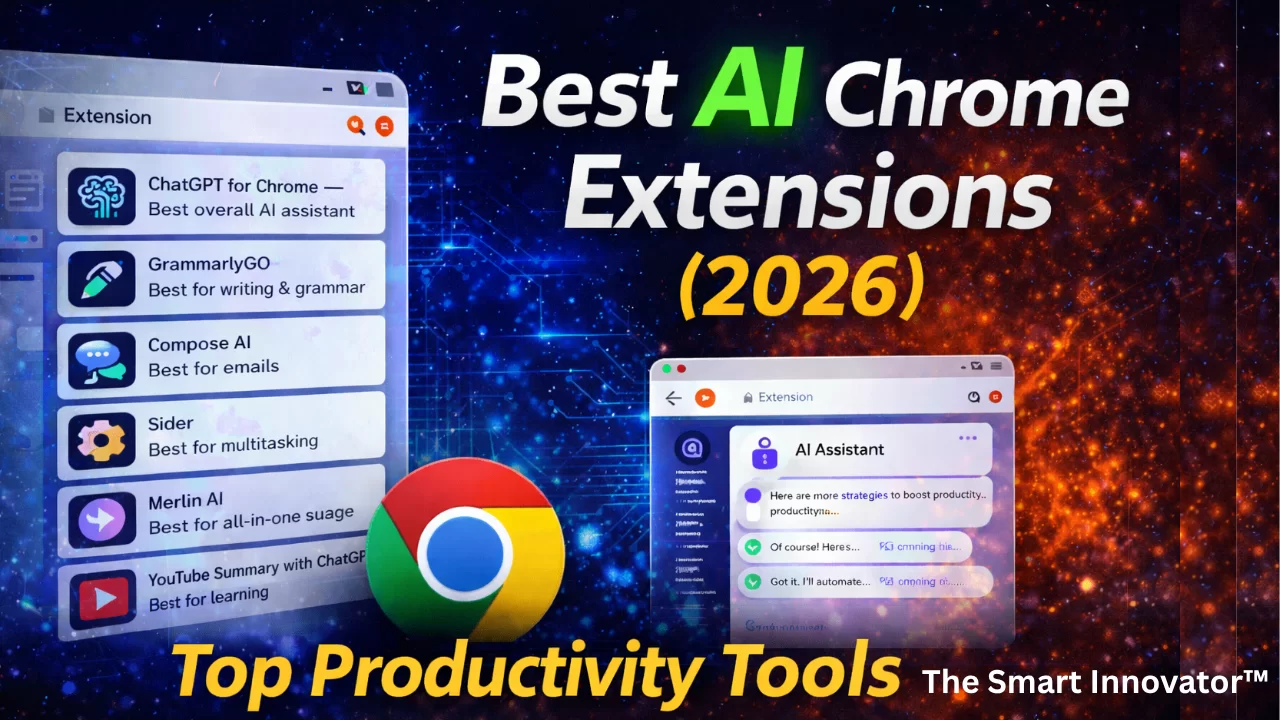
The Standouts That Earned Their Place
Let’s start with the good stuff, because there was more of it than I expected.
Perplexity — The Research Game Changer
I’ve used Perplexity as a search engine before, but the browser extension is a different beast entirely. It sits in your sidebar and reads whatever page you’re on, then answers questions with actual source citations. I was writing a piece about cloud infrastructure and needed to verify a stat about AWS market share. Instead of opening five tabs and cross-referencing, I highlighted the claim, clicked the Perplexity sidebar, and got a sourced answer in about ten seconds.citeweb_search:3#0
The free tier is generous enough for daily use. The $20 Pro plan unlocks GPT-4o and Claude access, which is nice but not essential unless you’re doing deep analysis work. For straight-up research and fact-checking, this extension alone justified the entire experiment.
ChatGPT Atlas — When It Works, It Feels Like Magic
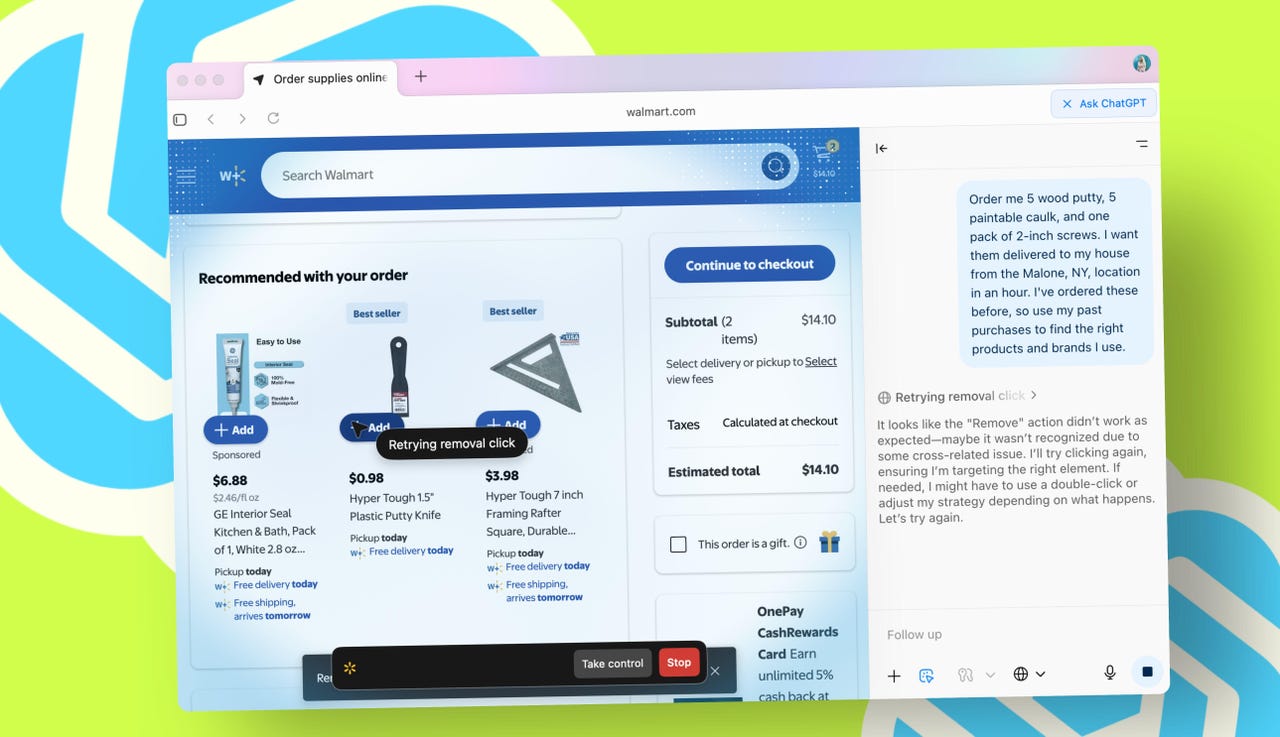
Atlas is OpenAI’s AI-native browser, and the Agent Mode is the headline feature everyone’s talking about. You give it a task — “book a restaurant reservation” or “order these supplies from Walmart” — and it navigates websites on your behalf, clicking buttons and filling forms like a virtual assistant with a mouse.citeweb_search:3#4
I tested it on a grocery order. Atlas searched the site, found the products, added them to cart, and walked me through checkout. When it worked, it genuinely felt like the future. But here’s the reality check: it stumbles on weird page layouts, aggressive CAPTCHAs, and anything that requires nuanced judgment. One test run on a travel booking site ended with Atlas confused by a dynamic calendar widget and me taking manual control.citeweb_search:3#7
It’s also Mac-only right now, and the full Agent Mode requires a $20/month ChatGPT Plus subscription. Still, for repetitive web tasks, it’s the most impressive agentic browsing experience I’ve tested.
Brave Leo — The Privacy-Friendly Surprise
I didn’t expect much from Brave’s built-in AI assistant, Leo, but it turned out to be the most reliable daily driver. It summarizes pages, answers questions about open tabs, and lets you switch between different LLM backends including Claude and Mixtral — all without creating an account or handing over personal data.citeweb_search:3#1
It’s not flashy. It won’t book your flights or write your emails. But for quick page summaries and tab context, it’s fast, lightweight, and genuinely private. If you’re already using Brave, it’s a no-brainer. If you’re not, it might be worth the switch if privacy matters to you.
Grammarly — Still the Writing King
This one isn’t new, but the 2026 version has gotten noticeably smarter about tone and context. I drafted a client email that was too casual, and Grammarly flagged it before I hit send. It also caught a factual inconsistency in a draft — something I didn’t even know it was capable of. For anyone who writes for a living, it’s still the most consistently useful AI tool in the browser.citeweb_search:3#2
The Overhyped Tools That Didn’t Deliver
Not everything lived up to the marketing.
Microsoft Edge Copilot — Powerful but Unreliable
Edge’s Copilot integration sounds great on paper. It can summarize multiple tabs, recall your browsing history through Journeys, and even generate images from the sidebar. In practice, it was the slowest and least reliable tool I tested. Simple queries worked fine, but anything complex — like asking it to compare two product pages — either failed entirely or took so long I gave up and did it manually.citeweb_search:3#7
It’s free and cross-platform, which is nice. But if you’re choosing a browser primarily for AI features, Edge isn’t the winner right now.
Opera AI — Feature-Rich but Fragile
Opera promises 150+ local AI models and deep tab context awareness. The reality? Page context was broken during my testing, local model integration felt half-baked, and the browser itself consumed noticeably more RAM than Chrome or Brave with similar extensions loaded.citeweb_search:3#6
It’s free, which is appealing, but the experience was too inconsistent to recommend over simpler alternatives.
What Actually Changed My Workflow
Here’s the honest truth: most of these tools are still in the “impressive demo, inconsistent reality” phase. But a few genuinely changed how I work.
Perplexity cut my research time by roughly 40%. Instead of opening a dozen tabs and skimming for answers, I ask one question and get a sourced summary. It’s not perfect — sometimes the sources are weak or the summary oversimplifies — but it’s dramatically faster than manual research.
Atlas Agent Mode saved me about 15 minutes on a complex form-filling task. That’s not life-changing, but it is genuinely useful. The key is knowing when to hand control back to yourself. Treat it like a helpful intern, not a replacement for your own judgment.
Brave Leo became my go-to for quick page summaries. Reading a long article? Ask Leo for the key points. It’s not as deep as Perplexity, but it’s instant and doesn’t require any setup.
Pros & Cons at a Glance
| Pros | Cons |
|---|---|
| Perplexity delivers fast, sourced research answers | Atlas Agent Mode fails on complex or unusual page layouts |
| Atlas can automate real web tasks like shopping and booking | Edge Copilot is slow and unreliable for multi-tab queries |
| Brave Leo works without signup and respects privacy | Opera AI’s page context was broken during testing |
| Grammarly’s tone detection keeps getting better | Running multiple AI extensions slows browser performance |
| Most tools offer generous free tiers | Agent features still require human oversight and intervention |
Expert Tip
Don’t install more than three AI extensions at once. Chrome is already a memory hog, and stacking AI tools compounds the problem fast. I noticed significant slowdowns when running Perplexity, Grammarly, and a sidebar assistant simultaneously. The fix is simple: pick your top two daily drivers and disable the rest. You can always toggle them back on when you need them. Extension managers like OneTab help, but the real solution is discipline — only keep what you actually use weekly.citeweb_search:3#0
FAQ
Which AI browser tool is best for research?
Perplexity is the clear winner for research in 2026. Its sidebar extension reads the page you’re viewing, provides source-cited answers, and lets you dig deeper without switching tabs. The free tier handles most daily needs, and the Pro plan adds access to GPT-4o and Claude for more complex analysis.citeweb_search:3#0
Can AI browsers really automate tasks for me?
Yes, but with caveats. ChatGPT Atlas’s Agent Mode can navigate websites, fill forms, and complete purchases on your behalf. It works well on standard layouts but struggles with CAPTCHAs, dynamic elements, and unusual page designs. Think of it as a helpful assistant, not a fully autonomous replacement for your own judgment.citeweb_search:3#4web_search:3#7
Will these tools slow down my browser?
They can if you stack too many. Most individual AI extensions are lightweight, but running multiple simultaneously — especially alongside heavy browsers like Chrome — will eat RAM and slow page loads. Stick to two or three active extensions and disable the rest when not in use.citeweb_search:3#0
Are AI browser extensions free?
Most operate on a freemium model. Grammarly, Perplexity, and Brave Leo offer generous free tiers that cover daily use. Advanced features like Atlas Agent Mode or Perplexity Pro require subscriptions starting around $20 per month.citeweb_search:3#0web_search:3#4
Which tool should I try first?
Start with Perplexity if you do research, Brave Leo if you want privacy and simplicity, or ChatGPT Atlas if you’re curious about agentic automation. Each serves a different use case, so pick the one that matches your biggest workflow bottleneck.
Final Thoughts
After a full week of living inside AI-enhanced browsers, my biggest takeaway is this: the tools are getting genuinely useful, but they’re not magic. Perplexity changed how I research. Atlas showed me what automation could look like in a year or two. Brave Leo proved you don’t need to sacrifice privacy for convenience.
But the hype still outpaces the reality. Edge Copilot feels unfinished. Opera AI overpromises. And even the best tools — Atlas included — require you to stay engaged, monitor their work, and step in when they hit a wall.
If you’re curious about AI browsers, start small. Install one extension. Use it for real work. See if it actually saves you time or just adds another layer of friction. For me, Perplexity and Brave Leo are staying installed. Atlas is on my radar but not my daily driver yet. The rest? Uninstalled.
The future of browsing is clearly AI-assisted. We’re just not quite at the “set it and forget it” stage yet — and honestly, that’s probably a good thing.
🎥 Recommended Video
https://www.youtube.com/results?search_query=AI+browser+tools+productivity+2026+tested

No comments:
Post a Comment