
I’ve been using Google since before I had a driver’s license. It’s muscle memory at this point — open browser, type query, scan ten blue links, click three, find what I need. But lately, something shifted. Google felt cluttered. The AI Overviews were sometimes helpful, sometimes hilariously wrong. The sponsored results kept creeping higher. And I kept finding myself opening Perplexity or ChatGPT instead.
So I committed to an experiment: for two weeks, I’d replace traditional search with AI tools for everything — work research, shopping, news, random curiosity, the whole deal. No Google. No Bing. Just Perplexity, ChatGPT Search, and Google Gemini.
Here’s what actually happened.

The First Surprise: Speed Isn’t Everything
I expected AI search to be faster. It wasn’t — at least not in the way I imagined. Perplexity takes a few seconds to synthesize an answer from multiple sources, while Google serves results instantly. But here’s the catch: with Perplexity, I usually got what I needed in one answer. With Google, I’d open four tabs, skim headlines, close two, read half an article, and still not be sure I had the right info.
For research-heavy tasks, AI search saved me real time. For quick lookups — “what time does the pharmacy close” or “weather tomorrow” — Google was still faster. The difference was context. AI tools excel when you need to understand something, not just find a fact.
Perplexity Won Me Over for Research
Perplexity was the standout of the experiment. Every answer comes with numbered inline citations linking directly to sources. That might sound like a small thing, but it fundamentally changes how you trust information. I could verify claims instantly instead of guessing which source was credible.
I used it for a work project about cloud infrastructure costs. Perplexity pulled current pricing data from AWS, Azure, and Google Cloud, cited the exact pages, and let me ask follow-ups like “which is cheaper for small teams?” The conversation felt natural, and the sources were always right there.
It’s not perfect. Perplexity’s answers can be shorter and less conversational than ChatGPT’s. The free tier has query limits. And for creative tasks or coding, it’s not the right tool. But for factual research with verification, nothing else matched it. Independent audits show approximately 91% search accuracy, with a 93.9% score on the SimpleQA benchmark — the highest among general-purpose AI search tools.
ChatGPT Search: Great for Conversations, Inconsistent for Facts
ChatGPT Search is the most natural conversational experience of the bunch. You can refine questions across multiple turns, and it remembers context beautifully. Ask about mechanical keyboards, then follow up with “which of those is best for coding?” and it knows exactly what you mean.
The problem is reliability. ChatGPT doesn’t always search the web — sometimes it relies on training data alone, which means answers can be outdated. Its citation format uses source cards rather than inline references, making it harder to trace specific claims. For a query about current iPhone pricing, it gave me launch-day prices from months ago because it didn’t trigger a web search.
For brainstorming, creative projects, and learning new topics, ChatGPT was my favorite. For anything time-sensitive or citation-critical, I’d switch back to Perplexity.
Google Gemini: The Ecosystem Play
Gemini’s strength is integration. If you’re already in Gmail, Google Drive, and Chrome, Gemini pulls context from your emails and documents to answer questions. That’s genuinely useful — “find the email about the meeting next Tuesday” works better in Gemini than anywhere else.
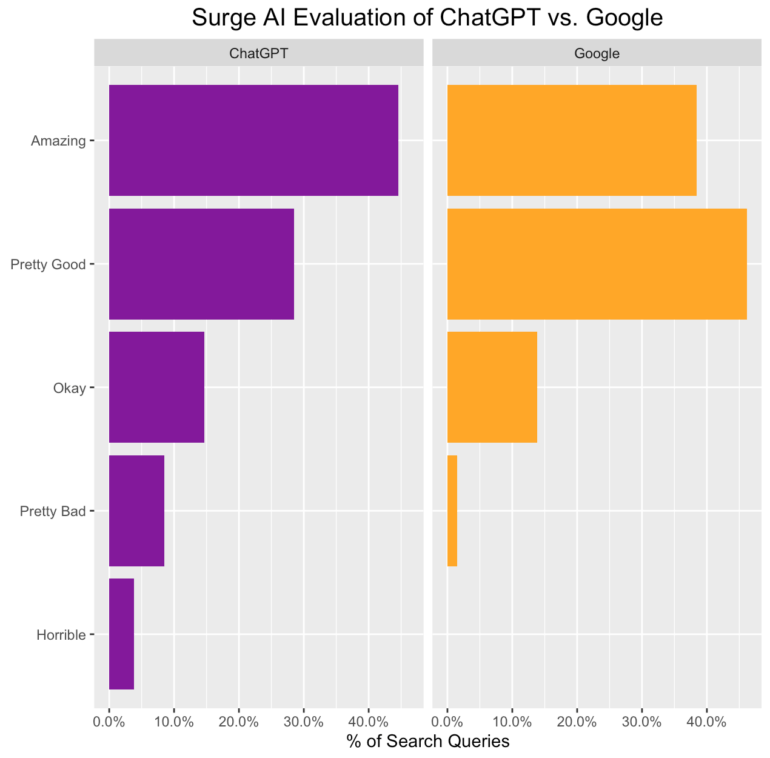
But as a standalone search replacement, it felt uneven. The citations are less transparent than Perplexity’s. It sometimes prioritizes Google’s own properties in results. And the conversational experience, while improving, still trails ChatGPT in multi-turn dialogue quality. For broad web research, I kept reaching for Perplexity instead.
What Google Still Does Better
Let’s be honest — AI search hasn’t killed traditional search yet. Google still dominates for local information. Finding a restaurant, checking reviews, getting directions, comparing prices — none of the AI tools matched Google’s depth here. Shopping research was another weak spot. AI tools can summarize product reviews, but Google’s image search, price comparison, and direct retailer links are still unmatched.
And then there’s the visual web. Searching for images, videos, or specific visual references? Google Image Search and YouTube integration are still light-years ahead. AI search tools are text-first, and it shows.
The Real Lesson: It’s Not Either-Or
By day ten of my experiment, I’d stopped trying to replace Google entirely. Instead, I developed a workflow. Perplexity for research and fact-checking. ChatGPT for brainstorming and learning. Google for local queries, shopping, images, and anything where I needed to browse multiple sources myself.
That’s probably the future of search — not one tool ruling them all, but a stack of tools you switch between based on what you’re trying to do. The researchers who thrive won’t be the ones who pick a winner. They’ll be the ones who know when to use each tool.
Pros & Cons at a Glance
| Pros | Cons |
|---|---|
| Perplexity provides sourced, verifiable answers with inline citations | AI search is slower for simple, single-fact lookups |
| ChatGPT handles conversational follow-ups better than any competitor | ChatGPT doesn’t always search the web — answers can be outdated |
| Gemini integrates deeply with Google Workspace for personal context | Google still dominates local search, shopping, and image results |
| No ads or sponsored results cluttering AI search results | AI tools struggle with visual and multimedia search |
| Follow-up questions feel natural and save time on complex topics | Free tiers have limits; full power requires $20/month subscriptions |
Expert Tip
Don’t force yourself to pick one search tool. The smartest approach is a hybrid workflow. Start with Perplexity for research-heavy queries where you need sources. Use ChatGPT for brainstorming, learning, and creative projects. Keep Google bookmarked for local info, shopping, images, and anything where browsing multiple sources yourself is faster. Test all three with the same query and compare results — you’ll quickly develop intuition for which tool serves each need best. And if you’re doing serious research, always verify AI-generated claims against primary sources. AI search is powerful, but it’s not infallible.
FAQ
Can AI search tools fully replace Google?
Not yet. AI tools excel at research, synthesis, and conversational queries, but Google still dominates local search, shopping, image search, and finding primary sources. The best approach is a hybrid workflow using both.
Which AI search tool is best for research?
Perplexity AI is the clear winner for research in 2026. It searches the live web on every query and provides numbered inline citations you can verify instantly. Independent audits show 91% search accuracy and a 93.9% SimpleQA benchmark score — the highest among general-purpose AI search tools.
Is ChatGPT Search reliable for current events?
It depends. ChatGPT Search uses Bing’s index and can access real-time data, but it doesn’t always trigger a web search. For time-sensitive topics, it may rely on outdated training data. Always double-check current events against Perplexity or Google directly.
Are AI search tools free?
Most offer generous free tiers. Perplexity gives unlimited basic searches and five Pro Searches per day. ChatGPT Search is available with the free tier but limited. For full access to advanced models and higher usage limits, expect to pay around $20 per month for Perplexity Pro or ChatGPT Plus.
Should I worry about AI search giving wrong answers?
Yes — hallucination is still a real issue. Perplexity mitigates this best with transparent citations. ChatGPT and Gemini can confidently state incorrect information. Always verify critical facts against the cited sources, especially for medical, legal, or financial queries.
Final Thoughts
Two weeks of AI-only search taught me something I didn’t expect: the future of search isn’t about replacing Google. It’s about knowing when not to use it.
Perplexity became my default for research. ChatGPT became my brainstorming partner. Google stayed in my toolbar for the stuff AI still can’t do well — local discovery, visual search, and browsing raw source material. The experiment didn’t end with me ditching Google. It ended with me using the right tool for the right job.
If you’re curious about AI search, start small. Pick one tool, use it for a week, and notice where it shines and where it falls short. You’ll probably end up with a hybrid workflow too — and honestly, that’s a better outcome than any single tool winning outright.
🎥 Recommended Video
https://www.youtube.com/results?search_query=AI+search+vs+Google+Perplexity+ChatGPT+2026

No comments:
Post a Comment