
Walk into any coffee shop in Austin, Seattle, or Brooklyn right now and you'll notice something odd. Half the people sipping their lattes are wearing sunglasses indoors. Not because they're nursing hangovers or pretending to be celebrities. They're wearing AI-powered smart glasses, and 2026 is the year this finally stopped being a Silicon Valley novelty and started feeling like the next smartphone.

Smart glasses aren't new. Google Glass flopped over a decade ago. Snap's Spectacles came and went in waves. But something changed recently. The hardware got light enough to forget you're wearing it. The AI got fast enough to actually understand what you're looking at. And the price dropped to a point where your coworker, not just your tech-obsessed cousin, is willing to buy a pair.
The Numbers Don't Lie
The result? Smart glasses shipments grew 167% year over year in 2026. IDC now expects roughly 13.6 million units to sell this year, climbing to 27.3 million by 2030. Meta's Ray-Ban line alone accounts for more than two-thirds of the entire market. Google and Samsung are prepping Android XR glasses. Apple is reportedly shifting strategy toward lightweight eyewear after the Vision Pro's weight turned off mainstream buyers. Even Snap is back with a new Specs model. The race is officially on.
What They Actually Do
So what do these things actually do? The current generation, led by Meta's Ray-Ban Gen 2 and the new display-enabled Ray-Ban lineup, packs a camera, open-ear speakers, microphones, and a growing suite of AI features into frames that look almost identical to regular sunglasses. Tap the temple and you can take a photo. Ask Meta AI what you're looking at and it'll describe it. Double-tap for live translation in a handful of languages. Take a phone call without pulling your phone from your pocket.
The display models, like the Ray-Ban Display at $799, go further. A tiny waveguide projector beams text, navigation arrows, and AI responses directly into your field of view. It's not immersive AR. You're not fighting aliens in your living room. It's a heads-up display for real life. Text messages, turn-by-turn directions, and live captions appear in your periphery while your eyes stay on the road, the trail, or the person across the table from you.
Why 2026 Feels Different
CES 2026 made it clear this isn't a niche anymore. Over fifty companies showed AI or AR eyewear. XREAL demoed Project Aura. VITURE announced Helix, built on NVIDIA's XR platform. Rokid undercut Meta on price at $299 with similar camera-and-audio functionality. The variety is exploding, but the core promise is the same. A wearable that keeps you connected without burying your face in a screen.
What makes this moment different from the Google Glass era is AI. Glass was a camera with a notification panel. These new glasses are an assistant that can see, hear, and respond in real time. Multimodal AI, the kind that processes video, audio, and text simultaneously, finally works fast enough to feel natural. Google's Gemini Live and OpenAI's realtime models can hold conversations with under 500 milliseconds of latency. That's quick enough that talking to your glasses feels like talking to a person, not shouting at a confused robot.
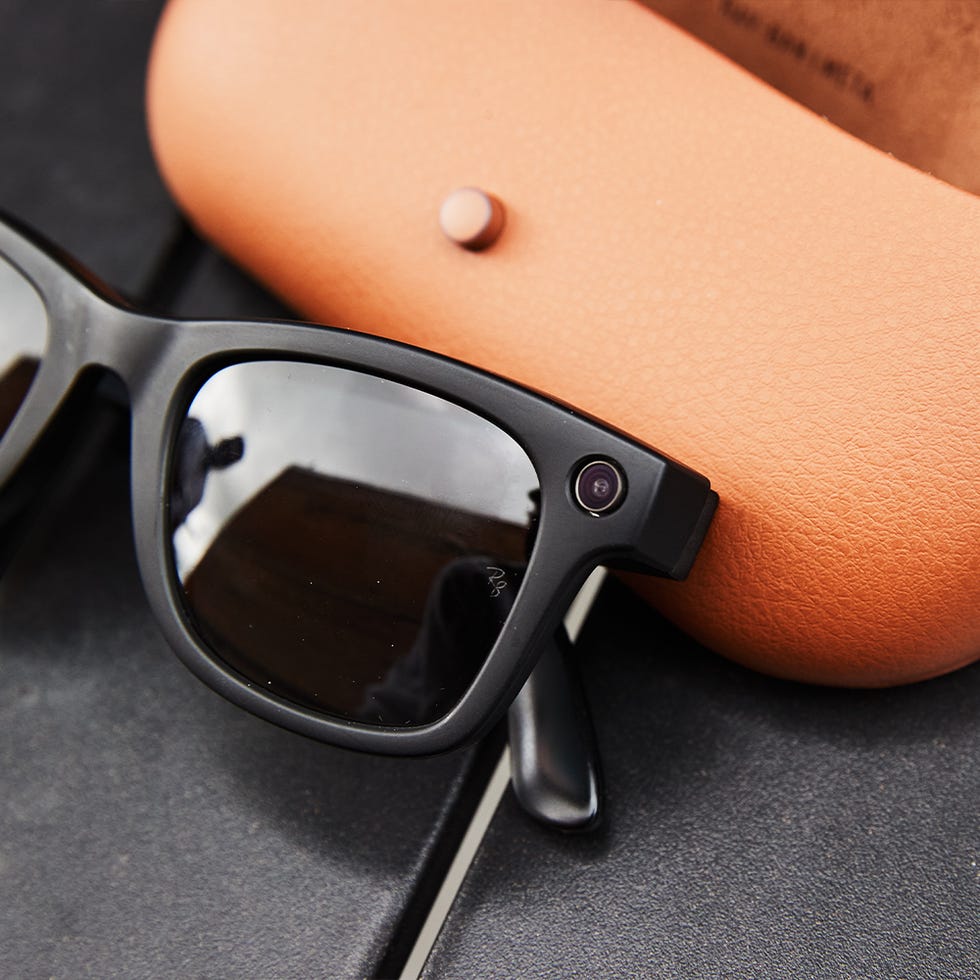
The social acceptance piece matters too. Early smart glasses made people uncomfortable. The camera was obvious. The design was alien. Now? They look like normal Ray-Bans. Oakleys. Classic frames you'd buy at the mall. That shift from gadget to fashion accessory is huge. Style drives roughly one-third of smart glasses purchases, a higher ratio than smartwatches. People want tech that doesn't announce itself.
Smart Glasses vs Smartwatch vs Smartphone
Not everyone is thrilled. Privacy concerns are real. Bars and concerts have started banning smart glasses outright. The idea of someone recording you without obvious notice makes people uneasy, and Meta's track record on data handling hasn't exactly built trust. There's also the question of whether we need another screen in our lives, even one that's transparent. Critics argue this is just moving phone addiction closer to our eyeballs.
Here's how smart glasses stack up against the wearables you probably already own.
| Feature | Smart Glasses | Smartwatch | Smartphone |
|---|---|---|---|
| Hands-Free Use | Fully hands and pocket free | One hand, wrist glance | Requires holding or pocket retrieval |
| Camera Angle | First-person POV, immersive | Awkward wrist positioning | Traditional handheld framing |
| AI Integration | Multimodal, sees and hears | Voice and health data only | Full app ecosystem, screen-based |
| Social Acceptance | Growing, looks like normal eyewear | Fully accepted everywhere | Universal, but screen-obsessed stigma |
| Battery Life | 6 to 12 hours | 1 to 2 days | All day, heavy usage |
| Starting Price | $299 to $799 | $199 to $799 | $400 to $1,200 |
Pros and Cons
Pros
- Fully hands-free calls, photos, and AI assistance
- First-person camera captures moments no phone can replicate
- Live translation and navigation without looking down
- Lightweight designs that look like normal sunglasses
- Prices have dropped to mainstream accessibility
Cons
- Privacy concerns around discreet recording
- Battery life still limits all-day heavy use
- Display models are expensive at $799 and up
- Some venues ban them outright
- AI accuracy remains inconsistent in noisy environments
Expert Tip
Here's something most early reviews won't tell you. If you're on the fence, start with the audio-only, no-display models like the Ray-Ban Meta Gen 2. At around $379, you get about 80% of the daily utility, headphones you never have to put in, and a camera for quick captures. The display models are impressive, but the $799 price and shorter battery life make them harder to justify unless you're specifically buying for navigation, live captions, or hands-free translation. Think of the basic pair as AirPods that can see. The display pair is a heads-up computer. Most people will be happier with the simpler option for now.
Frequently Asked Questions
Are smart glasses just another fad?
The sales numbers say no. 167% growth isn't hype-cycle territory. It's mass adoption. But whether they become as essential as smartphones or settle into a comfortable niche like smartwatches depends on what developers build for them over the next two years.
Can you get prescription lenses in smart glasses?
Yes, most major models now support prescriptions within certain ranges. Meta supports minus 4 to plus 4 on display models, and some newer frames promise better compatibility for stronger prescriptions.
Do they work without a phone?
Some newer models with eSIM support, like the RayNeo X3 Pro, can make calls and stream music independently. Most current models still pair with your phone via Bluetooth for full functionality.
Is the camera always recording?
No. There's a small LED light that illuminates when the camera is active, and you control capture with a physical button or voice command. It doesn't record continuously.
Will Apple release smart glasses soon?
Reports suggest Apple is pivoting from the heavy Vision Pro toward lightweight AI glasses, possibly as early as late 2026 or 2027. Nothing is confirmed, but the industry expects an announcement within the next eighteen months.
Final Thoughts
Smart glasses in 2026 feel a lot like smartphones in 2007. Not everyone has one yet. The people who do can't stop talking about them. And the people who don't are starting to wonder if they're missing something. The difference this time is that the technology actually works. It's not a prototype on a billionaire's face. It's a $300 pair of sunglasses that answers questions, takes photos, and plays your playlist while you bike to work.
Whether you buy a pair this year or wait for the inevitable Apple entry, one thing is clear. The screen is moving from your pocket to your face. And America is already along for the ride.
🎥 Recommended Video
https://www.youtube.com/results?search_query=AI+Smart+Glasses+2026+Review+Meta+Ray+Ban

No comments:
Post a Comment